Why Physics Still Matters in an AI World
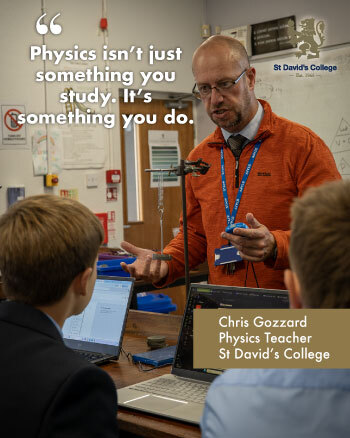
I can trace my career back to a handful of teachers at Eirias High School who had a habit of answering my questions with better questions. I'd done well enough in A Level Physics, Chemistry and Mathematics to have options, but it was that curiosity — the sense that there was always one more "why" underneath the answer I'd just been given — that sent me to the University of Manchester Institute of Science and Technology (UMIST) for a Master's degree. UMIST has since become part of the University of Manchester, and I think that merger rather suits the story: it brought together an institution built on hands-on science and engineering with one that already had physics running through its foundations. Ernest Rutherford split the atom there in 1917. The world's first stored-program computer, the Manchester Baby, ran its first instructions there in 1948. Graphene, a material one atom thick, stronger than steel, discovered with little more than a pencil and some sticky tape was isolated there in 2004, and went on to win its discoverers a Nobel Prize. It's not a bad place to learn that physics isn't just something you study. It's something you do.
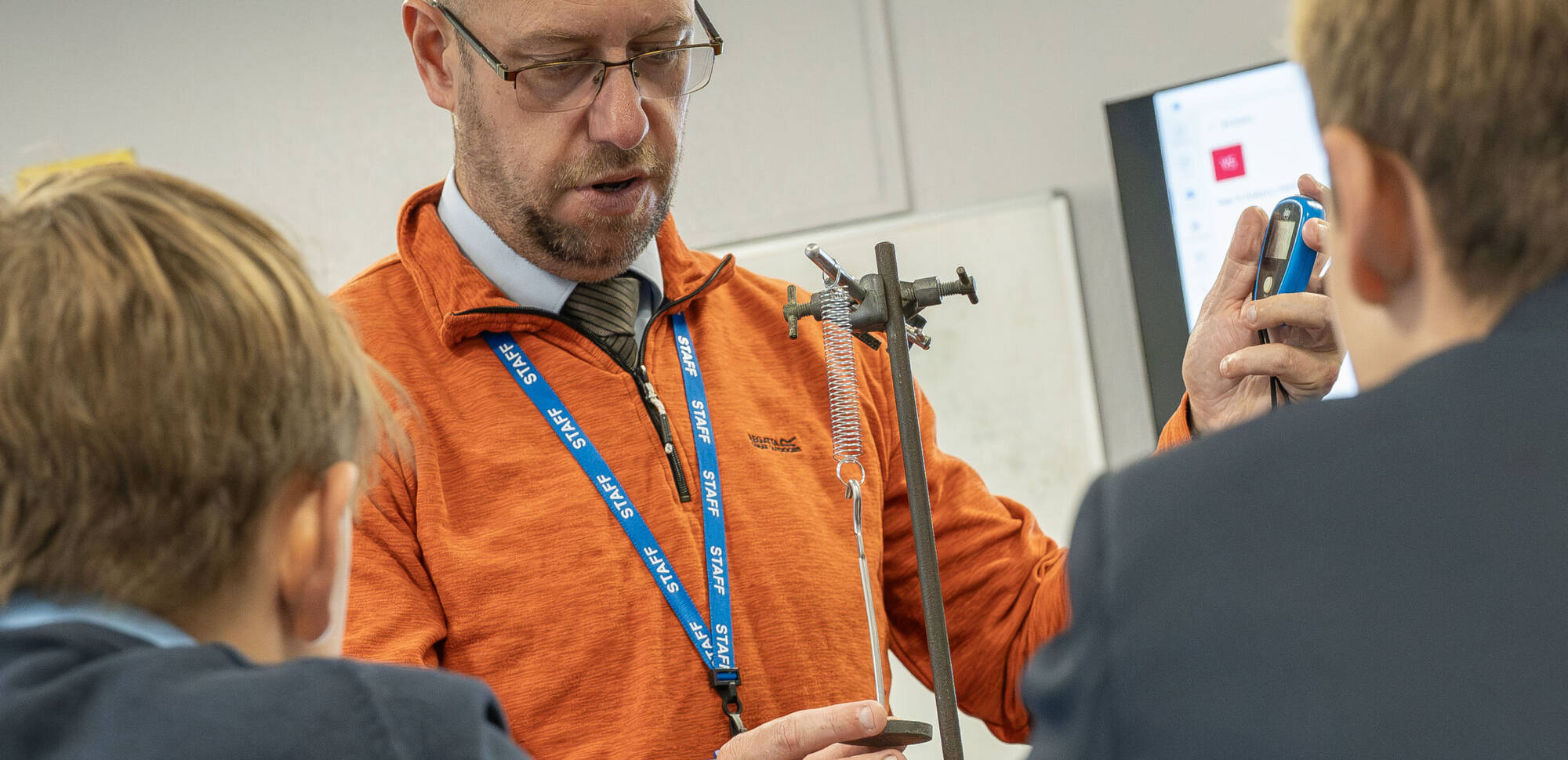
That's the instinct I've tried to build a career around, and it's why, every Friday, my classroom fills up for Electronics Club. I wanted somewhere students could get genuine, hands-on experience of building and experimenting with electronics, rather than meeting it only as theory on a whiteboard. So much of the modern world runs on embedded digital systems that simply "work" without anyone ever asking how. I want my students to look under the hood and to understand the wiring, the components, the circuits and to leave with the confidence to build, test and troubleshoot something themselves, rather than just switching it on and hoping.
That's really where the fun in physics lives, for me. It's a subject that lets students build, experiment and explore the world around them directly, rather than reading about it. Our students love the laboratories here at St David's, and particularly the chance to run experiments for themselves. There's something genuinely engaging about making something happen with your own hands and then asking, "why did that happen?" That question, asked for its own sake, is where curiosity turns into physics.
It's also, I'd argue, one of the more important questions a fast-moving world can teach a young person to keep asking. Physics sits underneath almost everything we use without thinking about it, the phone in your pocket, the television on the wall, the email you sent this morning. As that technology develops faster and faster, I think it matters more, not less, that students understand not just how to use it, but why it works. Physics gives them the knowledge and the curiosity to look past the device in front of them and understand what's actually happening underneath it. I don't just want my students to leave school as capable users of technology. I want some of them to leave as people who can question it, understand it, and - eventually - build the technologies that come next.
I think that future is arriving faster than most people expect, and physics has a particular part to play in it. It already has transformed the world more than once, from electricity and telecommunications to medical imaging and space exploration. What excites me now is its role as the bridge between the digital and physical worlds that artificial intelligence is going to need. AI can process extraordinary amounts of information, but information on its own doesn't move anything, it needs sensors, electronics, energy systems, communications and machines to turn thought into action, and that's physics' job, not computing's. The most interesting problems ahead, I suspect, won't be solved by any one of these fields alone. They'll be solved where physics, computing, engineering and AI sit around the same table.
That's ultimately what I want Electronics Club, and every physics lesson before it, to give my students: not just an exam grade, but the instinct to open something up and ask how it works. It's the same instinct that took me from a classroom in Llandudno to a lab in Manchester, and it hasn't let me down yet.
Chris Gozzard Physics Teacher, St David's College