

From Dependence to Independence
Rethinking Support for Pupils with Dyslexia
When a Year 9 pupil with severe dyslexia joined our school, he had never truly worked independently. In his previous setting, adult support had accompanied him throughout lessons, reading instructions, scribing answers and guiding him through written tasks. Although this support was well intentioned, it had unintentionally created dependence.
Within months, something changed.
With the use of assistive technology, including text-to-speech tools, spellcheck and Immersive Reader, alongside carefully structured classroom support, he began completing tasks independently for the first time. The transformation was not simply academic. His confidence, resilience and willingness to engage in lessons grew significantly.
The impact became even more apparent when examining his written work. When writing by hand, much of his work was largely indecipherable, characterised by limited vocabulary, inconsistent punctuation, random use of capital letters and ideas that appeared fragmented and difficult to follow. Even when using a keyboard, progress remained limited. Written responses were often brief, spelling errors were so severe that spellcheck software frequently failed to recognise intended words, and the effort required to record ideas often disrupted his train of thought.
However, the introduction of voice dictation software revealed a very different learner. Freed from the mechanical demands of handwriting and spelling, he began producing work that reflected his true understanding. His vocabulary became noticeably more ambitious, sentence structures more sophisticated and his written responses significantly more detailed. Word counts increased by approximately four times, spelling became almost entirely accurate and punctuation began to emerge more naturally within his writing. While there is still progress to be made, the technology has already enabled him to communicate ideas that were previously hidden behind his literacy difficulties.
The educational impact has been striking. Within two terms, his attainment improved from a Grade 3C in the autumn term to a Grade 6C in the summer term. More importantly, teachers began to see a different pupil: not one defined by his difficulties with recording, but one capable of demonstrating his knowledge, understanding and creativity when given appropriate tools. The technology did not lower expectations; it removed barriers.
This experience made me reflect on an important question: are schools sometimes supporting pupils in ways that unintentionally limit independence?
Across education, many support models still rely heavily on adult intervention. Readers, scribes and one-to-one classroom support absolutely have their place and remain essential for some pupils. However, if overused, they can sometimes prevent pupils from developing the independence they will ultimately need beyond school.
Over the last five years, however, assistive technology has evolved significantly. What was once viewed as specialist provision for a small number of pupils is increasingly becoming part of mainstream inclusive practice. Advances in artificial intelligence, speech-to-text software, text-to-speech tools and accessibility features embedded within everyday platforms such as Microsoft 365 have transformed how pupils with SEND can access learning independently.
This shift is also increasingly reflected in government guidance. The SEND and Alternative Provision Improvement Plan (Department for Education, 2023) emphasises the importance of inclusive mainstream education, early intervention and improved access to support through technology. Similarly, the SEND Code of Practice (DfE & DoH, 2015) highlights the responsibility of schools to remove barriers to learning and promote independence through appropriate support and reasonable adjustments.
More recently, the Department for Education has invested in national assistive technology initiatives, including staff training programmes and the 2025 Assistive Technology Lending Library Pilot, reflecting a growing recognition that assistive technology should not simply be viewed as an exam arrangement, but as an integral part of effective teaching and learning.
Assistive technology offers a powerful alternative because it shifts support away from constant adult mediation and towards pupil autonomy. Importantly, this is not about removing support; it is about changing the nature of support. Skilled staff remain central, but their role becomes one of coaching pupils towards independence, rather than doing tasks for them.
Research increasingly suggests that pupils with dyslexia and other specific learning difficulties benefit not only from accommodations, but from learning how to independently access tools that reduce cognitive barriers. For many pupils, technology can reduce the working memory demands associated with reading, writing and recording ideas, allowing them to demonstrate their understanding more effectively and with greater confidence.
Schools must therefore begin viewing assistive technology not as a "last resort" or solely an examination access arrangement, but as part of a broader inclusive teaching strategy that prepares pupils for further education, employment and adult life. Pupils who can confidently use technology to access learning are often better equipped to advocate for themselves and function independently beyond school.
Perhaps the most important question for schools is no longer:
"How much support can we provide?"
But instead:
"How much independence can we help pupils achieve?"
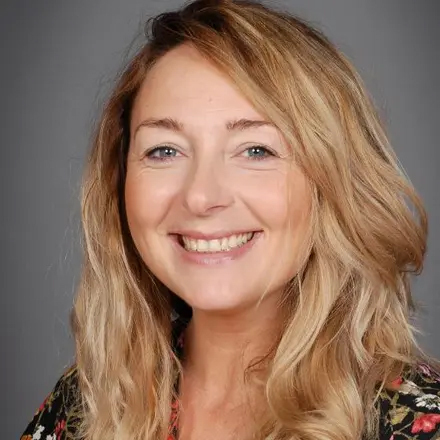
Head of SENco, St David’s College, Llandudno
Faye moved into education following a background in scientific research and has now worked in teaching, special educational needs and specialist assessment for over 15 years. She currently serves as SENCo/ALNCo, specialist teacher and assessor at St David's College, where she teaches mathematics and leads specialist provision for pupils with a wide range of additional learning needs.
Dr Favill specialises in supporting learners with dyslexia, dyscalculia, language disorders, developmental coordination disorder (DCD), ADHD, and other neurodiverse profiles. She works closely with pupils, families, school staff and external professionals, including speech and language therapists, occupational therapists, educational psychologists, counsellors, and local authorities, to help ensure that young people receive the support they need to thrive both academically and personally.
Alongside her teaching role, Dr Favill is an Associate Member of the British Dyslexia Association (AMBDA) and holds an Assessment Practising Certificate (APC), enabling her to carry out diagnostic assessments for dyslexia. A significant part of her work involves guiding families through the process of securing Individual Development Plans (IDPs) and Education, Health and Care Plans (EHCPs).
Passionate about helping young people develop confidence, independence, and self-belief, Dr Favill uses tailored teaching approaches, assistive technology and practical strategies to enable every learner to achieve their full potential, both in education and beyond.
If you would like a confidential chat with Faye, please contact admissions@stdavidscollege.co.uk